
World Cup 2026 Fixtures
Browse the full World Cup 2026 match schedule, switch local kickoff times, and filter fixtures by date or group.
World Cup 2026 Match Schedule Guide
This page is built to help you do more than just scroll through fixtures. Use it to understand how the 2026 schedule works, what makes this edition different, and how to follow the tournament without losing track of the bigger picture.
On this page
Why this schedule feels different
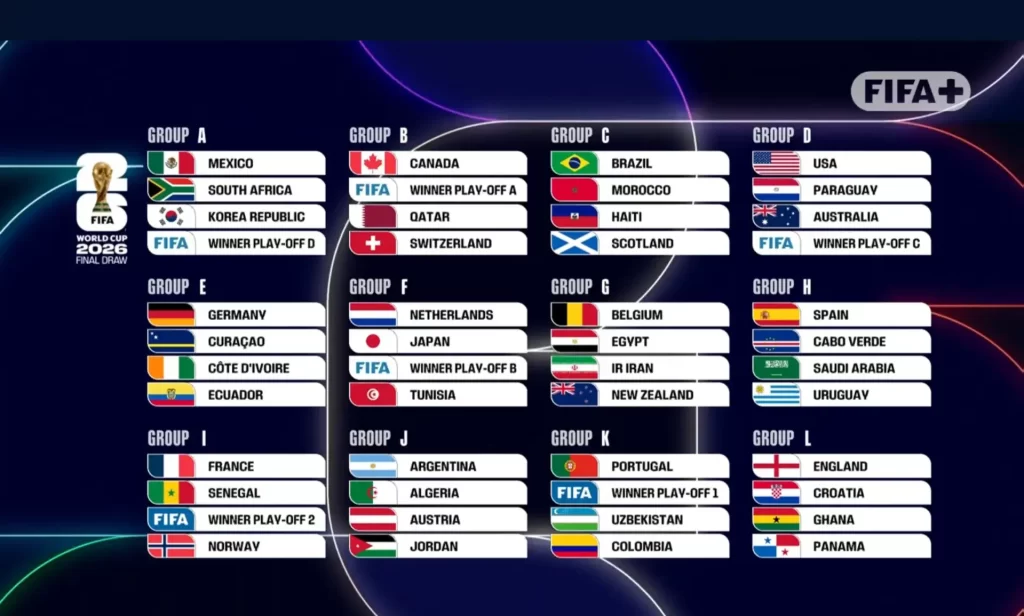
World Cup 2026 is not just another edition with a fresh set of teams. It is structurally different from the start. This is the first men’s World Cup to expand to 48 teams, which means the schedule is much bigger, the group-stage map is wider, and the early part of the tournament has far more moving pieces than many fans are used to.
In previous editions, a lot of supporters could follow the tournament with a rough mental picture. That becomes much harder now. With 104 matches across 16 host cities in three countries, the schedule is no longer something most people can track casually without a reliable hub.
That is the real purpose of this page. It is not here just to show a match list. It is here to make a much bigger tournament easier to follow.
Key tournament dates
The opening match of the tournament is scheduled for June 11, 2026 in Mexico City. The final is scheduled for July 19, 2026 in New York/New Jersey. That means the tournament stretches across a long viewing window, not a short burst of matches.
For fans, this matters because the schedule is not only bigger — it is also longer. A longer tournament changes how people watch. Most supporters will not follow every match the same way. Instead, they will choose priority matches, check tables after key results, and move between fixtures, standings, and bracket views depending on the stage of the competition.
In other words, this page works best when you use it as part of a system, not as a one-time lookup.
How to use this fixtures page
The simplest way to use this page is to start with the full fixture list, then narrow your focus based on what you care about most.
If your main goal is timing, use the local kickoff filters and country-based time views first. If your main goal is understanding what a result changes, your next stop should be the Group Standings page. If your question is about the road to the final, move to the Bracket page.
If you are mainly following one nation, the Teams page gives you the wider tournament context. If you are planning a trip around a match, the Tickets and Host Cities pages are the more practical next steps.
That is the best way to think about this page: the schedule starts here, but the tournament does not end here.
What to watch during the group stage
The group stage is where most fans make the mistake of treating every match the same way. In a tournament this large, that is not realistic. Some group-stage matches are simply more important than others, especially once early results begin to shape qualification pressure.
The best approach is to treat the schedule as a live map. First, check the kickoff time. Then check the table. Once you understand the standings, the value of each match becomes much clearer. A draw in one group can completely change the pressure in the next match. A first win can turn a quiet fixture into a decisive one.
This is why the standings page works so well with this fixtures page. The fixture tells you when a match happens. The table tells you why it matters.
Why the knockout rounds matter even more in 2026
The knockout structure also changes in this edition. Because the tournament field is larger, the elimination path begins with a round of 32 instead of feeling immediately centered on the round of 16 in the way many fans are more familiar with.
That adds another layer to the schedule. It also means the bracket becomes more important earlier, because the route through the knockout stage is broader and less intuitive to follow by memory alone.
Once the group stage begins to settle, the smartest move is to use this fixtures page together with the Bracket page. That makes it much easier to see not only when the matches are, but where they lead.
How to follow matches smarter
The biggest World Cup in history should not be followed in the most chaotic way possible. The most enjoyable way to use a schedule like this is to build a simple routine.
Start by checking the local-time version that fits your country. If you are in Southeast Asia, use the Local Kickoff Times hub. From there, choose your time-zone page, decide which matches are must-watch, then return here for the full schedule when you want the bigger calendar view.
After key matches, check Group Standings. As the tournament moves forward, check the Bracket. If you care about teams more than timing, check Teams.
That is how this page becomes genuinely useful: not just as a list, but as the center of a better match-day workflow.
Frequently asked questions
How many matches are in World Cup 2026?
There are 104 matches in the 2026 tournament. That makes it the largest men’s World Cup schedule to date.
When does World Cup 2026 start and end?
The opening match is scheduled for June 11, 2026, and the final is scheduled for July 19, 2026.
Why does this schedule feel more complicated than older World Cups?
Because the tournament is larger in every major way: 48 teams, 104 matches, 16 host cities, and three host countries. There are simply more fixtures and more scheduling pressure than many fans are used to.
What should I check after I find a kickoff time?
Usually the next page should be Group Standings, because that tells you what the result means. If you care more about the knockout path, go straight to the Bracket.
Where should I go if I want local time instead of one big schedule?
Start with the Local Kickoff Times hub, then choose the country page that matches your time zone.
Can I use this page for travel planning too?
Yes, but it works best together with the Tickets and Host Cities pages, because travel planning is not just about date — it is also about access and location.